
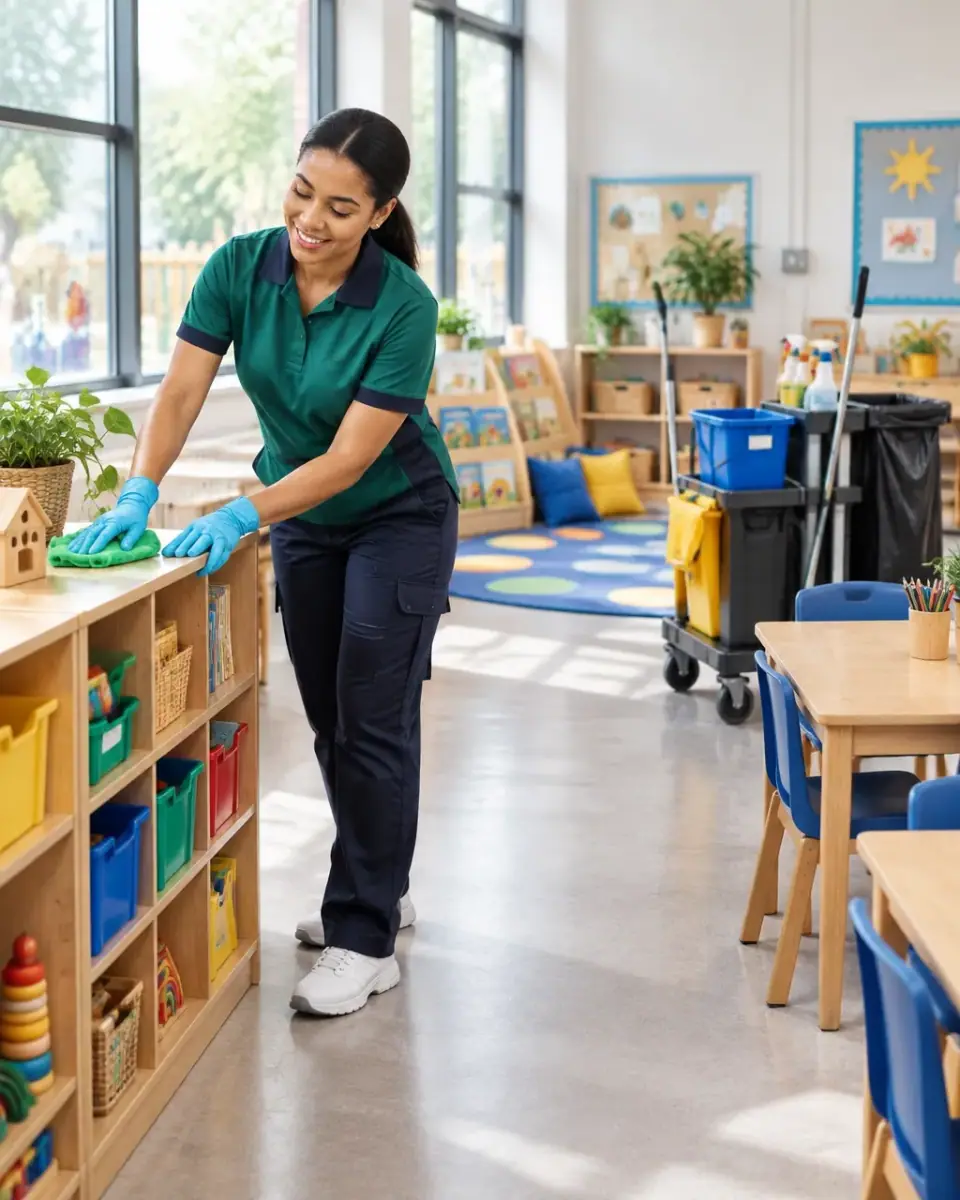
A reliable school cleaning plan starts with the way your premises is used. It should match the school day, distinguish busy areas from restricted zones and make clear what is cleaned, when and by whom.
For school business managers, estates and facilities leads, and nursery operators, a written, room-by-room schedule helps turn daily expectations into a repeatable routine. It also gives your team a practical way to report missed tasks, supply shortages and maintenance issues.
There is no single timetable that suits every education setting. Build frequencies around occupancy, room use, surface type and your own risk assessment. The UK Government’s guidance for education and childcare settings advises regular attention to frequently touched surfaces and appropriate cleaning when surfaces are soiled.
Plan cleaning around when pupils and staff use the building
Agree the cleaning windows before assigning tasks. A routine may combine early-morning or evening cleaning with checks during the day in washrooms, dining areas and other high-use spaces. Consider arrival and collection times, clubs, lettings, events and any rooms that remain in use after lessons.
Map the building into access zones. For example, identify public areas, classrooms, staff-only rooms, food areas and any restricted spaces. Record which rooms can be entered, when they are available, and who authorises access. This makes the plan easier to follow and helps avoid disrupting lessons or leaving rooms unsecured.
Keep term-time and holiday schedules separate. During term, prioritise regular cleaning and the spaces that see the most use. School holidays can provide a better window for planned tasks such as machine hard-floor cleaning and a more thorough clean of accessible areas. Confirm dates, room access and priorities with the person responsible for the premises.
Use this room-by-room checklist to set daily standards
Treat the checklist as a starting point. Adjust it to your building, schedule and agreed cleaning specification. Record the task, frequency, responsible person and any completion or escalation notes.
Classrooms and nursery rooms
- Wipe agreed desks, tables and frequently handled chair surfaces.
- Clean sinks, taps and dispensers where fitted.
- Empty bins and replace liners where required.
- Vacuum carpets or sweep and mop hard floors, as appropriate.
- Clean visible marks and soiling within the agreed scope.
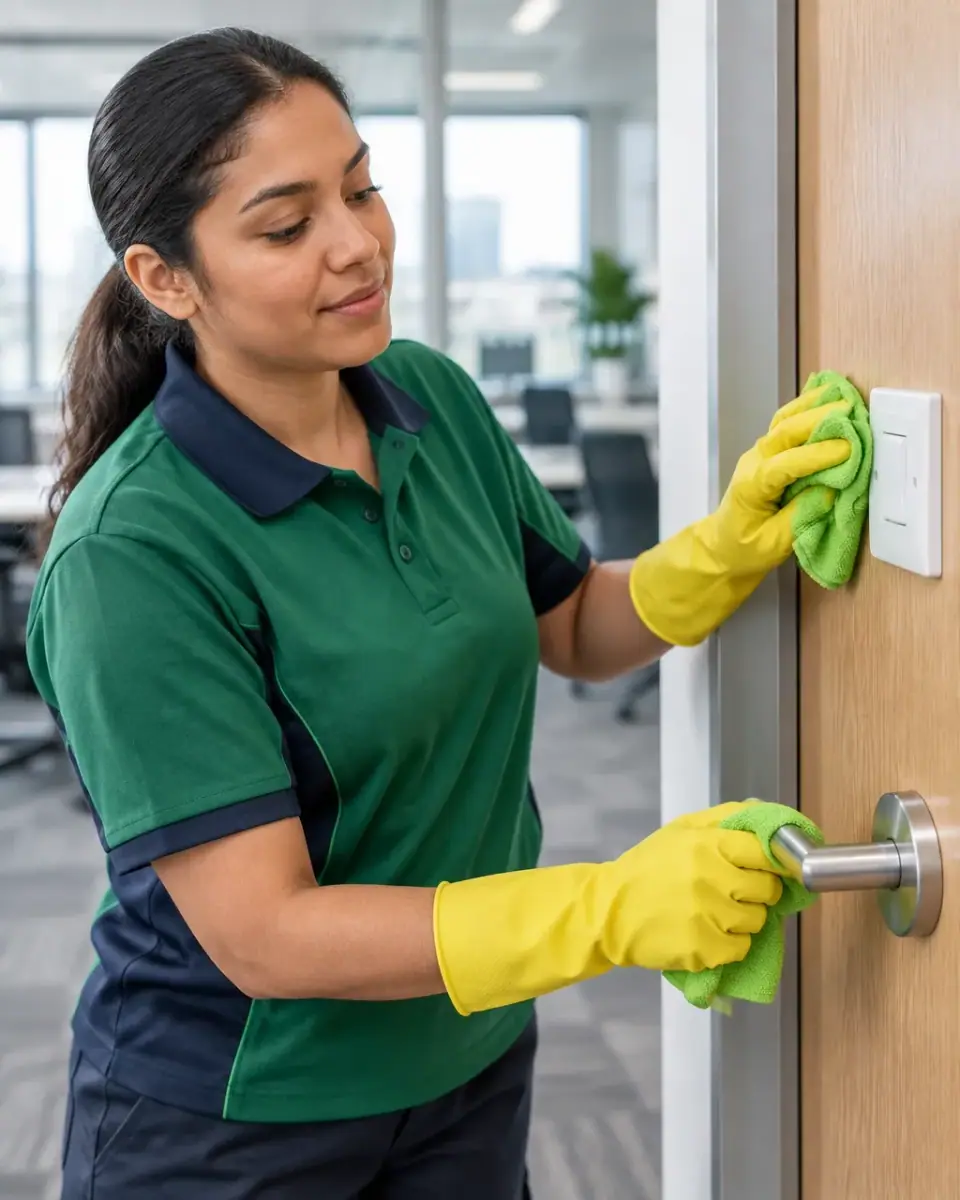
- Check door handles, light switches and other frequently touched points.
Reception and entrance
- Clean reception counters and agreed visitor-facing surfaces.
- Empty bins and tidy the immediate area.
- Check entrance floors and mats for tracked-in dirt or visible debris.
- Wipe frequently touched handles and access points.
- Report damage, spills or hazards that need attention.
Corridors and stairs
- Remove litter and empty bins.
- Vacuum or clean floors according to surface type and use.
- Wipe agreed handrails, push plates and door handles.
- Keep routes clear while cleaning; report damage, obstructions or trip hazards.
Toilets and washrooms
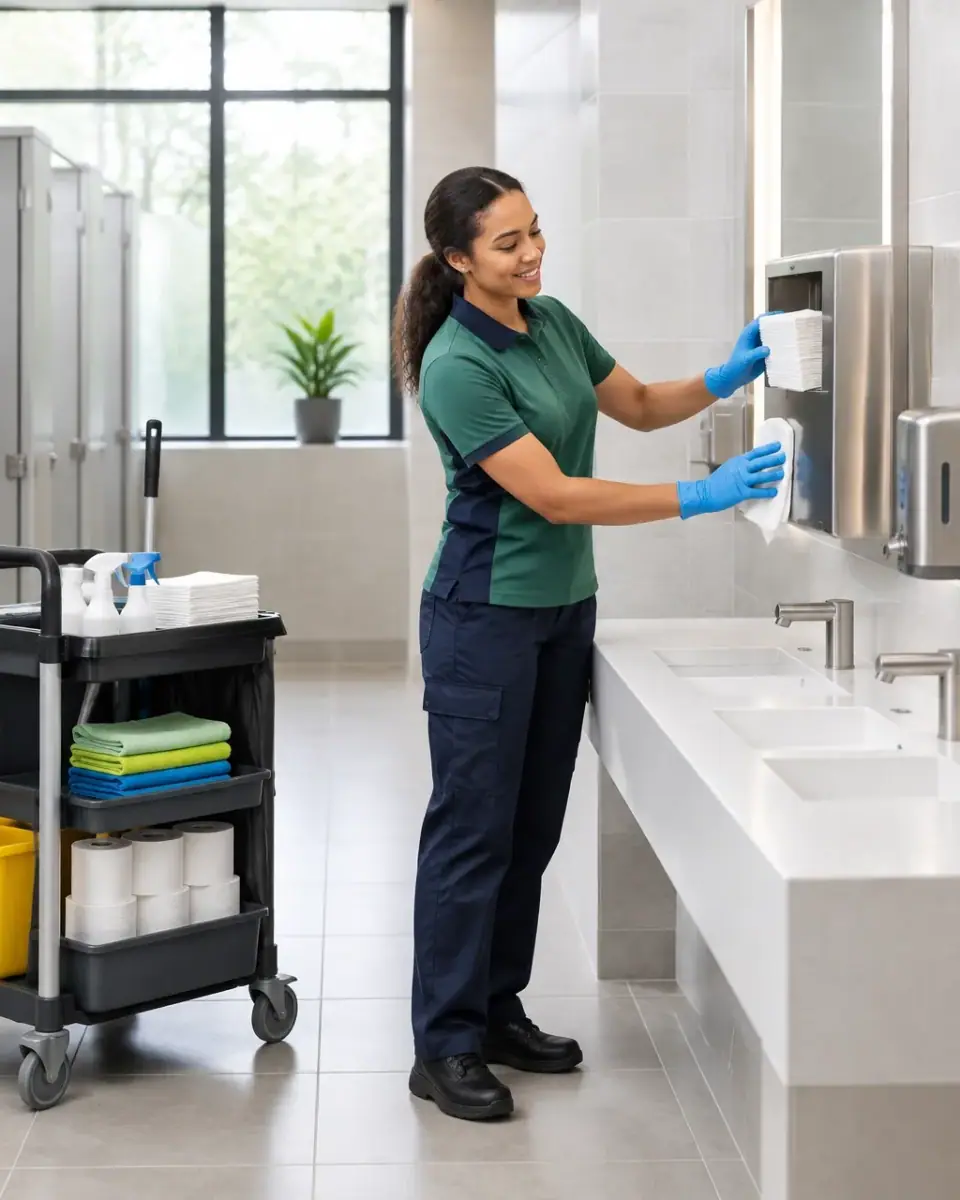
- Clean toilet pans, urinals, basins, taps, mirrors and agreed cubicle surfaces.
- Clean floors and remove waste.
- Wipe flush handles, taps, locks, door handles and other regular touchpoints.
- Replenish agreed washroom supplies.
- Report leaks, blockages, damaged fittings or empty dispensers promptly.
Staffrooms, dining areas and sports spaces
- In staffrooms, clean agreed tables, worktops and sinks; empty bins and clean floors.
- In dining areas, clean tables and food-contact surfaces using the setting’s agreed procedure, and address visible spills promptly.
- In sports or leisure areas, clean agreed floors, touchpoints and shared spaces, taking account of booking times and room access.
Make touchpoints and equipment part of the written routine
Touchpoints can include door handles, push plates, handrails, light switches, taps, flush handles, dispenser levers and shared tables. Identify the ones used most in your setting and include them in the schedule. Increase attention where use is particularly heavy or where visible soiling calls for an immediate response.
Use colour-coded equipment consistently to keep cleaning tools within their designated areas. CQD’s four-zone approach uses red for washrooms, blue for general areas, green for kitchens and food areas, and yellow for clinical or isolation zones. Follow the site’s agreed colour scheme and make sure staff know where each cloth, mop and tool belongs.
Products and methods should be specified for the task. COSHH arrangements should cover safe use, dilution where applicable, storage, access to product information and suitable training. Keep cleaning products securely stored away from pupils and unauthorised people; never transfer chemicals into unlabelled containers or mix products. The Health and Safety Executive’s COSHH guidance explains how to assess and control risks from hazardous substances.
Routine environmental cleaning is different from specialist clinical or contamination work. If bodily fluids or suspected hazardous contamination are involved, follow the setting’s incident procedure, restrict access as needed and use appropriately trained personnel and the specified method. Do not treat a routine classroom checklist as a substitute for specialist advice or procedures.
Keep access, safeguarding and maintenance visible
A cleaning plan should specify how the team enters and secures the premises, which keys or access arrangements apply, and how restricted rooms are handled. Agree expectations for working around pupils, staff and visitors, including any site-specific safeguarding procedures and reporting routes.
Include a simple escalation method. Cleaners should know who to notify about a leak, broken fitting, damaged flooring, pest concern, blocked toilet or supply shortage. Cleaning teams can report what they observe; maintenance decisions and safeguarding action remain with the responsible people at the setting.
Consistency also depends on continuity and cover. CQD assigns the same dedicated two-person team to each premises, with cover teams available during absence. Cleaners are directly employed, DBS-checked, reference-verified and uniformed.
Match daily tasks with term-time and holiday priorities
A practical programme separates routine cleaning from periodic work. Daily tasks keep rooms and shared facilities in order; planned periodic tasks address areas that need a different method or a longer access window.
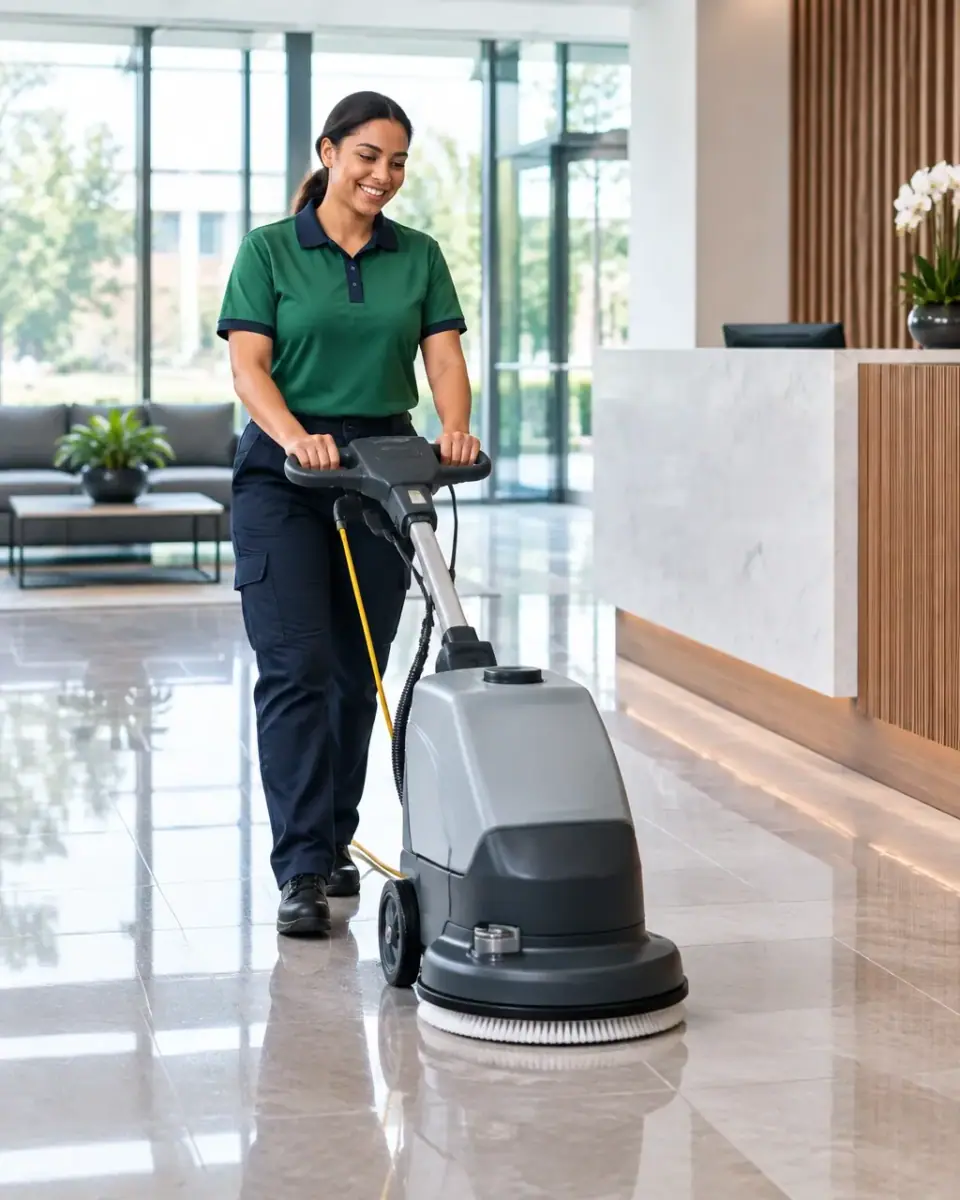
Machine hard-floor cleaning, for example, can be scheduled around floor type, use and access. Holiday periods may offer more room to complete this work without interrupting lessons, but confirm the timing against site bookings and reopening dates.
Choose a subscription that fits the agreed cleaning plan
CQD’s Bronze, Silver and Gold monthly subscriptions support daily school and nursery cleaning. Each includes an initial deep clean with every new subscription. Starting prices are:
| Package | Starting price, excluding VAT | Includes |
|---|---|---|
| Bronze | £880 per month | Daily vacuuming and mopping, bin emptying, desk and surface cleaning, washroom cleaning and restocking |
| Silver | £1,280 per month | Everything in Bronze; machine hard-floor cleaning; deep kitchen and breakroom cleaning; daily touch-point sanitisation; named supervisor oversight |
| Gold | £1,680 per month | Everything in Silver; daily machine hard-floor cleaning; washroom consumables fulfilment; regular inspection and sign-off; cover teams for staff absence |
The final fixed monthly price is confirmed after a free, no-obligation site survey. CQD has provided commercial cleaning since 2012, has more than 14 years’ experience and has served over 500 businesses. The company is ISO 9001, ISO 14001 and ISO 45001 certified, a BICSc member, CHAS accredited and fully insured. Subscriptions have no long-term contract and can be cancelled with 30 days’ notice.
Frequently asked questions
How often should a school washroom be cleaned?
Set the frequency according to use, occupancy and your site’s risk assessment. A written plan should cover routine cleaning and replenishment, with a way to respond to visible soiling or supply shortages during the day.
Should classrooms and washrooms use the same cleaning equipment?
No. Keep equipment within the site’s agreed colour-coded zones. This helps prevent tools intended for washrooms being used in general areas or food spaces.
When should a school plan deeper floor cleaning?
Choose a time that suits the floor type and building use. School holidays may provide a useful access window, provided the work is coordinated with site bookings and reopening plans.
Can CQD plan cleaning around the school day?
Yes. CQD is available 7 days a week and 24 hours a day, with the schedule agreed around the premises. Mobilisation is planned in days, and daily cleaning typically starts within 5–7 working days once the plan is agreed.
Request a free site survey and tailored written plan
A clear cleaning specification gives your school or nursery a practical room-by-room routine, agreed access arrangements and a defined route for reporting issues. CQD supports customers across 33 locations in South East England: 6 primary locations and 27 other locations.
Explore school and nursery cleaning, view all CQD services or contact the team to arrange a free, no-obligation site survey. Call 01494 911001 to discuss your premises and cleaning priorities.
