
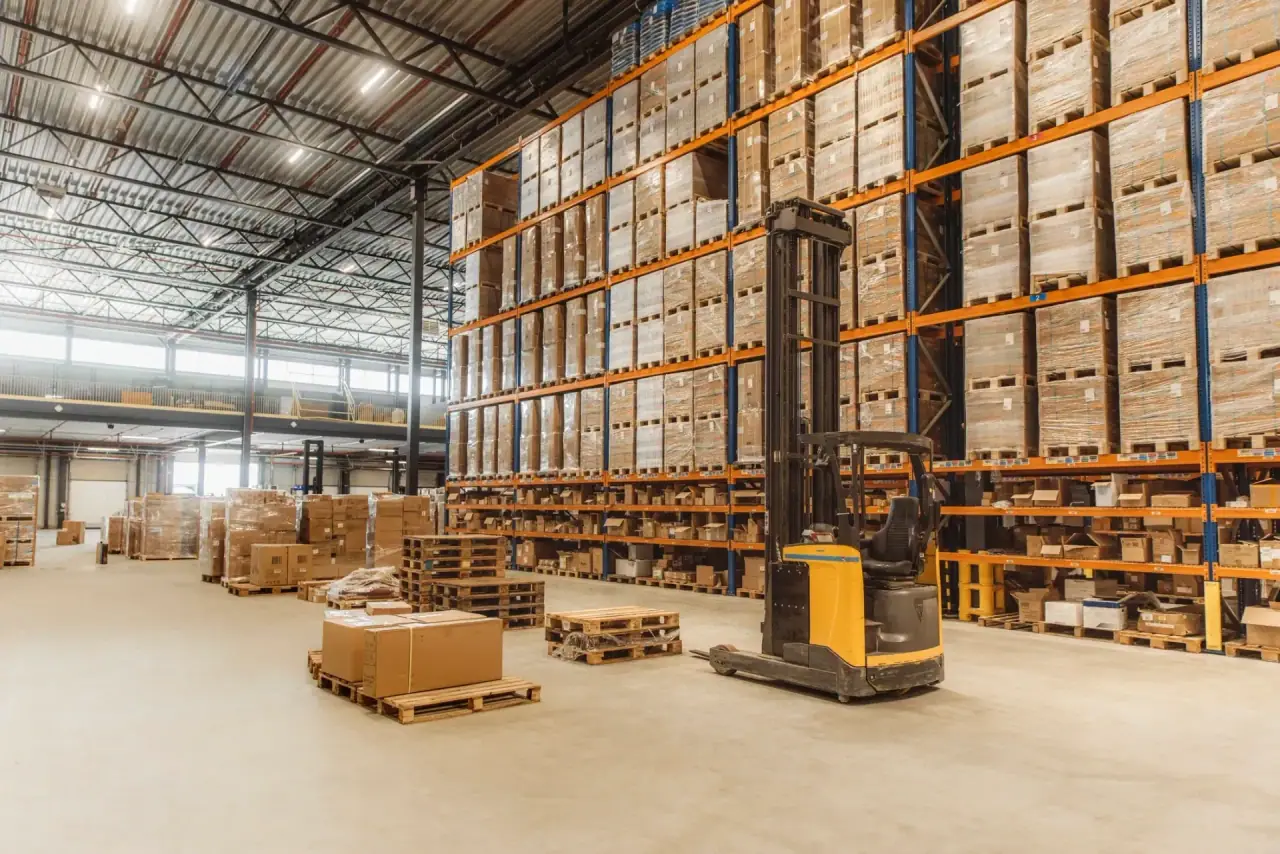
A practical warehouse cleaning programme fits around the work, not against it. It accounts for shift changes, vehicle movements, racking, loading bays and the facilities staff use throughout the day.
Use this checklist to build a repeatable routine. Adapt it to your site’s risk assessments, traffic plan, operating hours, floor types and actual cleaning requirements. Cleaning should support safe, orderly operations; it does not replace your site’s safety procedures or inspections.
Plan cleaning around shifts and safe access
Start by mapping the site into practical zones: vehicle and pedestrian routes, high-traffic floor lanes, storage aisles, goods-in and dispatch, loading bays, welfare facilities, break rooms and offices.
Then agree when each area can be accessed. Quiet periods between shifts may work well for some tasks, but shift handovers can also bring increased pedestrian movement. Confirm timing with the operations supervisor rather than assuming a zone is clear.
Before work starts, agree:
- Which areas are available and when.
- How routes will be closed or segregated during cleaning.
- Who can authorise access and confirm an area is safe to enter.
- Where equipment and approved cleaning products can be stored.
- How cleaners report a spill, defect or restricted-access issue.
- What information must be passed to the next shift.
The HSE’s workplace transport guidance stresses keeping routes clear and planning safe movement around vehicles. Cleaning must not obstruct traffic routes or take place in an active vehicle area without the site’s agreed controls.
Daily warehouse cleaning checklist
Use this as a starting point for a shift-aligned daily routine. Set task frequency for each zone according to footfall, debris levels and operating risk.
1. Check routes and remove obstructions
At the agreed start of the cleaning window:
- Check pedestrian walkways, crossings, stairs, doorways and emergency exits.
- Look for loose packaging, pallet wrap, bands, cardboard and other debris.
- Keep traffic lanes, clearways and floor markings visible and unobstructed.
- Report damaged floor surfaces, poor visibility or blocked routes to the site supervisor.
- Do not move stock, pallets or equipment unless you have authorisation.
Remove routine debris using a suitable method that does not create dust or leave trailing cables and hoses across routes. If an area is busy or cannot be safely segregated, defer the task and report it rather than working around moving vehicles.
2. Clean high-traffic floor lanes
Aisles, cross-aisles, picking and packing areas, and routes to goods-in and dispatch often collect dust and loose debris quickly. Include these lanes in the daily schedule, with extra attention to areas where traffic or material handling is concentrated.
Choose sweeping, vacuuming or machine cleaning to suit the floor, debris and safe access conditions. Keep the floor dry or safely segregated until it is ready for use again. Put warning signs where needed, and remove them only when the surface is safe to reopen.
3. Fit loading bay cleaning into controlled windows
Loading bays need coordination with the people managing deliveries and vehicle movements. The HSE loading-area guidance highlights safe space for vehicles and people, clear bay edges and keeping people who are not involved in loading away from the area.
During an agreed window:
- Remove loose packaging, pallet bands and routine debris.
- Clean accessible floors and surfaces within the approved work area.
- Keep marked edges, exits and access routes clear.
- Do not clean around an active vehicle or dock operation.
- Report damaged dock surfaces, leaks or other defects promptly.
Cleaning staff should not alter barriers, dock equipment or other safety controls. Site management remains responsible for access arrangements and the safe release of the area.
4. Reset washrooms, welfare facilities and break rooms
Clean toilets, basins, taps, washroom touch-points and floors at the agreed frequency, then replenish the specified supplies. Check bins and remove waste before they overflow.
Break rooms and kitchen areas need their own routine: wipe tables and worktops, clean accessible surfaces, empty bins and leave shared areas orderly. Keep kitchen equipment and supplies within the agreed cleaning scope.
The HSE’s workplace facilities guidance covers facilities such as toilets, handwashing, drinking water and places to rest and eat. Your cleaning schedule should reflect how frequently staff use each area and the facilities provided on site.
5. Include industrial offices and desks
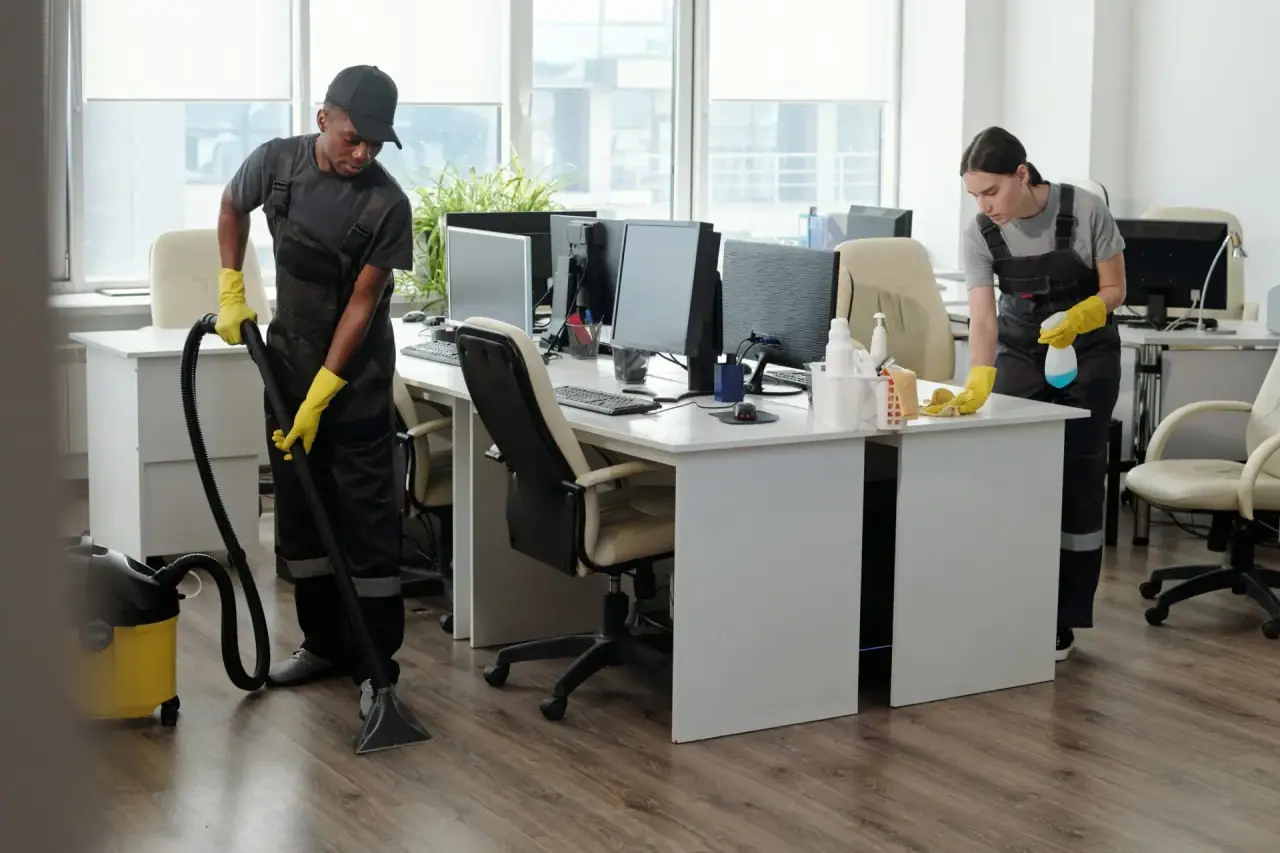
Warehouse offices, control rooms and shared desks can be missed when the programme focuses only on operational floors. Add agreed tasks for desks, visible surfaces, bins and shared touch-points, timed around staff availability.
Use the right cloth and equipment for each area. Keep cleaning products away from paperwork, screens and stored materials unless the task and product are suitable. If a desk or room is not available, record it for the agreed follow-up rather than leaving the omission unreported.
6. Manage spills, waste and chemical products safely
For a routine floor spill within the cleaner’s agreed training and scope, follow the site spill procedure: make the area safe, prevent access if needed, use the approved method and report the cause. This is environmental cleaning of floors only. It is not hazardous chemical decontamination.
If a substance is unknown, a container is leaking, or the incident falls outside the cleaner’s training or the site procedure, stop and escalate it to the responsible site contact. Do not attempt to handle it as an ordinary cleaning task.
Keep waste and pallet-band areas orderly. Use designated containers and agreed waste routes, and report recurring build-up or overflowing bins so the schedule or collection arrangements can be reviewed.
Use only approved, correctly labelled products. Follow the relevant COSHH controls, product instructions and required protective equipment. Store chemicals securely in the designated place, in their approved containers. Never mix products or decant them into unlabelled bottles. The HSE COSHH guidance explains the need to assess risks and provide staff with information, instruction and training.
Use machine cleaning where the floor suits it
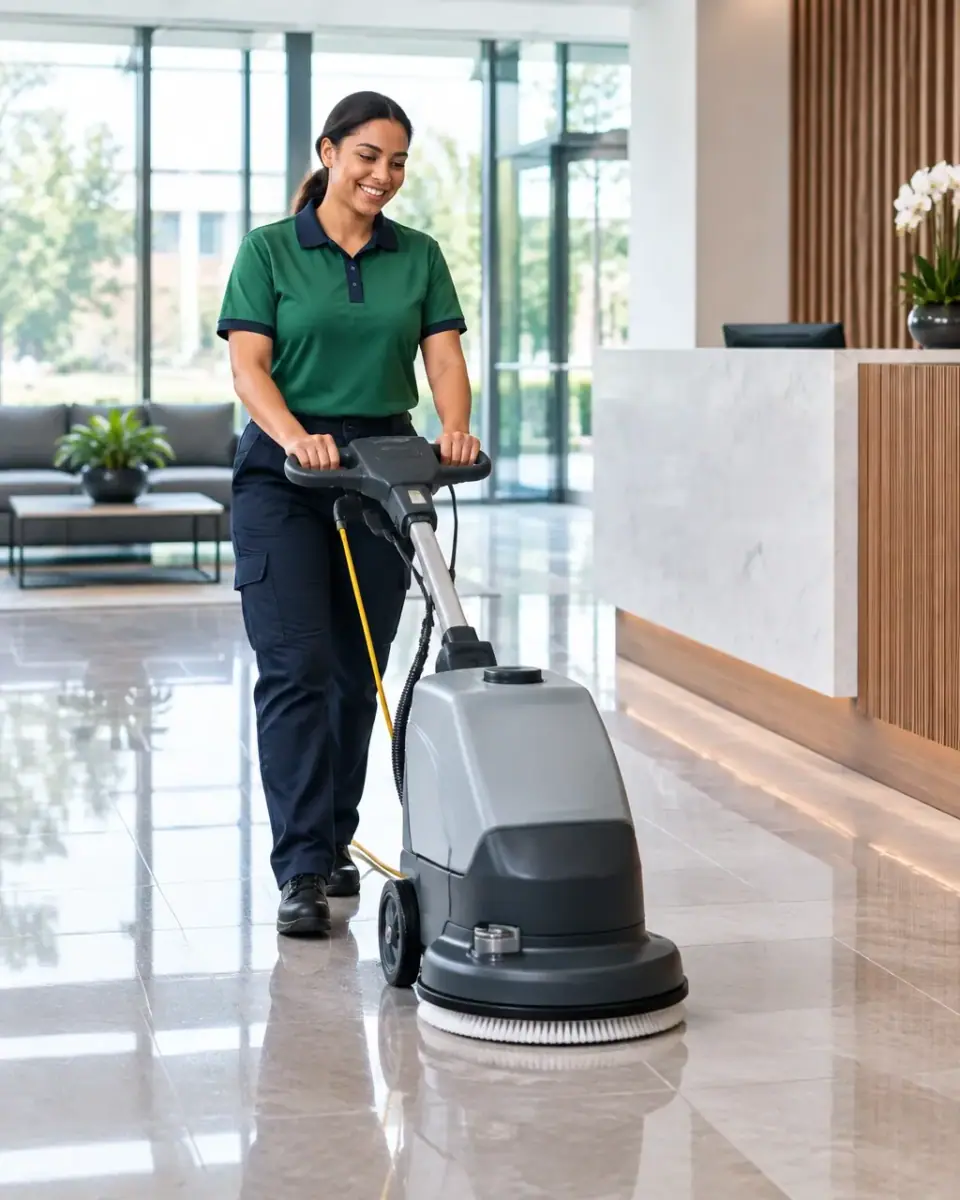
Machine hard-floor cleaning can help maintain smooth, suitable floors in high-traffic areas. It can provide a more consistent clean than manual methods across larger accessible floor sections, provided the equipment, floor and site conditions are appropriate.
Set machine work for a period when the area can be segregated. Confirm the route, operator competence, equipment condition and how the surface will be left safe before reopening. Machines are not suitable for every floor, aisle or operational window, so specify their use zone by zone.
Treat racking and high-level cleaning as planned work
As cleaners move through storage zones, they can report visible concerns such as a leak, loose debris, damaged floor markings or apparent damage to racking. They should report these observations promptly to the person responsible for the site and follow instructions about restricting access.
Cleaning is not a substitute for a racking inspection programme, and cleaners should not diagnose structural damage, climb racking or disturb stored goods.
High-level dusting and cleaning should be planned separately. It requires a competent method, appropriate access equipment, suitable work-at-height controls and coordination with warehouse operations. It is not routine day-to-day cleaning from an improvised platform or forklift.
Make handovers and records part of the routine
A short record helps managers see what was completed and what needs attention. At the end of the cleaning window, confirm that agreed tasks are done, equipment is removed, waste is taken to the designated point and the area is safe to hand back.
Record:
- Date, shift and zones accessed.
- Tasks completed or deferred, with the reason.
- Spills, defects or access problems reported.
- The person notified and any follow-up required.
- Any recurring issue that may need a change to the schedule.

Choose a cleaning schedule that matches your site
A useful programme distinguishes between daily tasks and periodic work. Daily cleaning usually focuses on agreed floor lanes, waste, washrooms, welfare spaces and other high-use areas. Periodic tasks can cover deeper cleaning of accessible floor sections, less-used corners and agreed surfaces that do not require daily attention.
Make the schedule specific: name the zones, task, timing, access conditions and reporting route. Review it when shifts, site layout, traffic patterns or usage change.
For a warehouse or industrial premises, CQD Cleaning Services provides commercial cleaning through monthly subscriptions. The service is planned after a free, no-obligation site survey and tailored written plan. The same dedicated two-person team is assigned to your premises, with cover teams available for staff absence. Cleaning is available 7 days a week, 24 hours a day, including nights and weekends.
CQD is a commercial cleaning specialist established in 2012, with 14+ years’ experience and more than 500 businesses served. Its credentials include ISO 9001, ISO 14001 and ISO 45001, BICSc membership, CHAS accreditation and full insurance. Cleaners are directly employed, DBS-checked, reference-verified and uniformed.
All prices below are starting from prices, excluding VAT. Your final fixed monthly price is confirmed after the site survey.
Compare Bronze, Silver and Gold
All prices below are starting prices, excluding VAT. Your final fixed monthly price is confirmed after the site survey. The initial deep clean is included with every new subscription.
| Package | Starting from (per month, ex VAT) | What it includes |
|---|---|---|
| Bronze | £880 per month ex VAT | Daily vacuuming and mopping, bin emptying, desk and surface cleaning, washroom cleaning and restocking. |
| Silver | £1,280 per month ex VAT | Everything in Bronze; machine hard-floor cleaning; deep kitchen and breakroom cleaning; daily touch-point sanitisation; named supervisor oversight |
| Gold | £1,680 per month ex VAT | Everything in Silver; daily machine hard-floor cleaning; washroom consumables fulfilment; regular inspection and sign-off; cover teams for staff absence |
There are no hidden fees. The subscription has no long-term contract and can be cancelled with 30 days’ notice either way. Daily cleaning typically starts within 5–7 working days of the agreed plan.
CQD serves 33 locations across South East England: 6 primary locations and 27 other locations. Explore warehouse and industrial premises cleaning, view all services or request a free site survey.
Warehouse cleaning checklist FAQs
How often should warehouse floors be cleaned?
Set the frequency by zone, traffic, debris and operating conditions. High-traffic lanes and areas where loose material can create a hazard may need more frequent attention than low-use storage areas. Review the schedule when site activity changes.
Can cleaning take place while forklifts are operating?
Only where the site has approved the method and controls. Agree access and segregation with the responsible supervisor. Do not enter an active vehicle route or assume a zone is safe because it appears quiet.
Is machine hard-floor cleaning suitable for every warehouse?
No. It depends on the floor surface, machine, debris, access and the ability to keep people and vehicles away while work is under way. Include machine cleaning only where the method is suitable and the area can be safely managed.
What should cleaners do if they find a spill or damaged racking?
Follow the site reporting and spill procedures. Routine floor cleaning is not hazardous chemical decontamination, and cleaners should not assess or repair racking. Escalate unknown substances, leaks and visible damage to the responsible site contact.
How does CQD tailor a warehouse cleaning plan?
CQD carries out a free, no-obligation site survey and provides a tailored written plan. The service is delivered through Bronze, Silver or Gold monthly subscriptions, with a fixed price confirmed after the survey.
